Why Cinematic Production Is Replacing Studio Neutrality
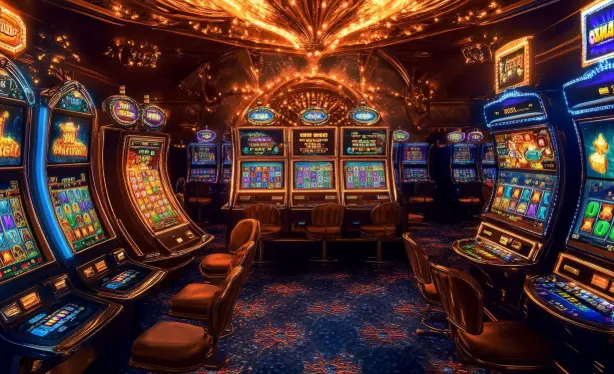
For most of its history, live casino production aimed for neutrality. A table was a table, a dealer was a dealer, and the environment was deliberately understated so that it would not distract from the game itself. That convention is now being challenged by studios that treat live casino production as a form of entertainment design rather than a form of table reproduction. The result is a category of products that look and feel closer to television game shows than to traditional casino floors.
The shift is driven by player behaviour. Modern live casino players are not simply placing bets; they are choosing how to spend an evening. A cinematic studio environment gives them something to look at between rounds, a sense of place, and a level of production value that a neutral table cannot match. Studios that have invested in cinematic production have seen measurable improvements in session length and player retention, which is why the trend has accelerated across the industry rather than remaining a niche approach.
How Branded Tables Turn Operators Into Destinations
A branded table is a live casino table that has been customised to match a specific operator's identity. The felt carries the operator's colours, the background carries the operator's branding, and the promotional messages displayed to players are drawn from the operator's own marketing calendar. From the player's perspective, the experience feels native to the operator's platform rather than borrowed from a third-party studio. From the operator's perspective, this is a meaningful differentiator in a market where most live casino products are functionally identical.
The commercial logic is straightforward. A generic table is a commodity: every operator that offers it looks the same to the player. A branded table is a product: it cannot be replicated by a competitor without a comparable investment in studio infrastructure and production design. Operators that have invested in branded tables have found that the cost is justified by the improvement in brand recall and player loyalty, particularly in markets where the operator's brand is a meaningful part of the player's decision to play.
The Technical Reality Behind a Single API
When a studio advertises a "single API integration," what it is really offering is a layer of abstraction that hides the complexity of the underlying systems. Behind that single API sit dozens of individual game servers, streaming pipelines, dealer scheduling systems, and compliance reporting tools. The API presents them as a unified product so that the operator does not have to manage the complexity directly. Getting this abstraction right is one of the most difficult engineering problems in the live casino industry.
The benefit for operators is speed of deployment. A well-designed single API can be integrated in a matter of weeks rather than months, which matters enormously in a market where the difference between launching a new product first and launching it second can be measured in millions of euros. The trade-off is that the operator has less visibility into the individual systems that sit behind the API, which can make troubleshooting harder when something goes wrong. Studios that offer strong technical support alongside their API tend to be the ones that operators return to for additional integrations.
Beach Studios, Theme Environments, and the New Aesthetics of Live Play
Themed environments are one of the more visible innovations in modern live casino. A baccarat table set against a tropical sunset, a roulette wheel surrounded by neon signs, a blackjack table installed in a stylised luxury apartment — these are not simply marketing gimmicks. They are attempts to create a sense of place that a neutral studio cannot provide. Players respond to environments, and the environments that live casino studios build are increasingly designed with the same care that a film set would receive.
The challenge is that thematic environments have to work across a wide range of player tastes. What feels glamorous to one player may feel excessive to another, and what feels authentic in one market may feel inauthentic in another. The studios that have succeeded in this area tend to build thematic environments as variants alongside neutral ones, so that players can choose the aesthetic that suits them. The result is a category that is more diverse than it has ever been, and that continues to expand as studios experiment with new formats.
Compliance, Licensing, and the Cost of Operating at Scale
Every live casino product that reaches a regulated market has passed through a compliance process that most players never see. The studio must hold a valid licence in each jurisdiction where it operates, maintain full video archives of every round, submit to periodic audits by independent testing laboratories, and provide cryptographic proof of the integrity of its streaming pipeline. These requirements are not negotiable, and they scale with the number of markets that the studio serves.
The cost of compliance is one of the reasons why the live casino market has consolidated faster than the broader iGaming sector. A studio that operates in two jurisdictions can absorb compliance costs relatively easily; a studio that operates in twenty jurisdictions must maintain infrastructure that would be excessive for a purely digital product. This dynamic favours large studios over small ones, and it explains why the number of significant live casino studios has remained relatively stable even as the overall iGaming market has grown.